Monday, June 17, 2013

The Power of a Salacious Name and Well-Timed Heist


The internet is a content pig and, like the animal itself, not particular about what it eats. Its taste for news runs more to the now-defunct News of the World than CNN. To be blunt, most of what passes for news on the internet is garbage.

This past weekend, especially if you favor talk about whiskey, you heard about Chicken Cock Whiskey, probably for the first time. This is not Fighting Cock Bourbon, a fine Kentucky Straight Bourbon Whiskey made by Heaven Hill. Chicken Cock is a brand new flavored whiskey product from serial distilled spirits entrepreneur Matti Antilla (Cabana Cachaca), whose business (Abb Partners, LLC) appears to be based in Florida although Chicken Cock has a Charleston, South Carolina address, perhaps because the University of South Carolina's sports mascot is the gamecock.

Chicken Cock comes in an aluminum bottle, in three flavors: Cinnamon, Southern Spiced, and Root Beer.

For readers who prefer whiskey-flavored whiskey, you might want to know that 'flavored whiskey' was a moribund classification until recently. Because whiskey is hot right now every trendy, new youth-oriented spirits product wants to be called 'whiskey.' According to the regs, 'flavored whiskey' is whiskey to which natural flavors have been added. Invariably, the whiskey part just barely meets the minimum requirements for use of that term.

Flavored whiskey can be bottled as low as 30% ABV (60° proof) but Chicken Cock is 43% ABV (86° proof).

On Friday, it was reported that on June 10, a truck carrying 10,000 bottles of Chicken Cock on their way to a Texas distributor was stolen from a truck stop in Florence. No reports of this robbery appeared in the media until after Antilla dropped his press release, publicizing the theft and offering a $10,000 reward for the return of his whiskey.

Most outlets just re-printed the press release or paraphrased it, questioning nothing. No one, for instance, seems to have looked at a map. Charleston to Florence is a funny way to get to Texas.

Some of our friends did good work. Davin de Kergommeaux explored the brand's legitimate history, which Antilla has been clever enough to appropriate. He researched the term 'chicken cock,' a regional synonym for 'rooster,' and also found a Canadian connection. Fred Minnick talked to Antilla and determined that, although Antilla's press release says the truck was coming from his Charleston "distillery," Chicken Cock is a non-distiller producer. Minnick also called the Florence County sheriff, but they haven't returned his calls.

Stories like this often disappear. What catches the content-hungry eye is the vaguely salacious name, the sensational crime, and the plea to the public for help. The resolution, when it comes, probably will only be reported if Antilla publicizes it. That is what the news business has become.

Realistically, the loss to Antilla is about $60,000, less whatever he can recover from insurance; or $10,000 if he gets the shipment back and pays the reward, but he got a million dollars worth of publicity. That, boys and girls, is how it's done.

Thursday, June 13, 2013

Some 'Right Now' Solutions to the NDP Whiskey Problem


When brands are created using bulk whiskey from a major distiller but the producer tries to convince you he's a craft distiller, that hurts real craft distillers. It also hurts consumers, who pay for something they aren't getting. Last month, we proposed certification as one possible solution.

No such certification program exists now, of course, so that's somewhere in the future. Here are some easy steps craft distillers can take right now to protect consumers and themselves, and separate the makers from the fakers.

First, create a very simple statement, one that a Potemkin distillery can't make. If craft distillers can informally agree on a standard wording, all the better. Then put it on everything, certainly on your product labels, web site, Facebook page, etc.

Here's what Balcones uses: "100% of Balcones whisky is mashed, fermented and distilled at our distillery. We never resell whisky from other distilleries or source aged whisky barrels for blending under the Balcones label. This is authentic craft whisky. It has not been chill-filtered, colored or otherwise unnecessarily tampered with to ensure that its full aroma and flavor are preserved. As a result, you may notice a slight haze or sediment in the bottle - signs of the rich oils and esters that we have not removed so that your whisky can be enjoyed at its best."

The last two sentences are probably superfluous, but the rest is right on target.

Second, start putting 'distilled by' on your label. Stick your DSP number in there too. Although it's usually not required, it's something the feds regulate so if someone falsifies a 'distilled by' statement, they could lose their license.

Third, whatever you do, keep it simple and keep it standardized. Do it exactly the same way every time. Then publicize it. Send every whiskey blogger the press release. Encourage your distiller friends to do it too. Everyone can tell consumers that all you have to do when you see a new 'craft' product is look for that statement. If you can't find it you should be very, very suspicious.

Who knows, that might be all it takes.

Tuesday, June 11, 2013

The Knob Creek Bourbon Brand Is Nearly 80 Years Old. Who Knew?


This label, from 1935, was discovered by a poster on StraightBourbon.com. It's a real gem.

The Jim Beam-made Knob Creek we all know was part of the Jim Beam Small Batch Bourbons Collection, which debuted in 1992. No one then or since has ever mentioned that the brand was part of the company's DNA from long before that.

The label tells us that Knob Creek was a straight bourbon whiskey, bottled at 93° proof (46.5% ABV). It was distilled by the Penn-Maryland Corporation of Cincinnati, Ohio, a division of National Distillers.

Beam merged with National in 1987 and started to work on the Small Batch Collection (SBC) shortly thereafter. It is common for marketers, looking for new product ideas, to mine their corporate archives. This discovery suggests that someone at Beam took a stroll down National's Memory Lane and found Knob Creek languishing there.

It's very clear where the other three SBC names originated. Booker's was named after Jim Beam's grandson, the legendary master distiller Booker Noe. Baker's was named after the grandson of Jim Beam's brother, Park, the legendary master distiller Baker Beam. Basil Hayden's was named after one of the founders of the Kentucky whiskey industry, whose grandson created the Old Grand-Dad brand in his honor. Booker and Baker are, quite literally, from the Beam family. We knew Basil/Grand-Dad was from National and now we know Knob was too.

It was a very different world in 1987. Beam bought National primarily to obtain DeKuyper and, specifically, DeKuyper Peachtree Schnapps. Beam didn't really want the National bourbons, but neither did anyone else. Of the group, Old Grand-Dad was the most desirable because it still commanded a premium price, so at least it was profitable.

The explanation for the Knob Creek name has always been that there is a real Knob Creek, in the vicinity of Beam's Kentucky distilleries, that is tied to Kentucky's Abraham Lincoln heritage. The second and last Lincoln family farm in Kentucky was what Abe later called "the Knob Creek place." According to local tradition, Lincoln's father was a seasonal hand at a nearby distillery in what is now Athertonville, also along Knob Creek.

There's also a famous shooting range on and named after Knob Creek. It's the site of CMT's "Guntucky." (With Fort Knox nearby, shooting ranges around there are a little different.)

National Distillers was formed in 1924 from what was left of the Whiskey Trust. Throughout Prohibition National bought closed distilleries, along with their brands and whiskey stocks, for pennies on the dollar. National had a medicinal whiskey business and made industrial alcohol, but they were also betting that Prohibition would be repealed. When it was, National held about half of the aged whiskey in the U.S., and owned about 140 different brands.

The Penn-Maryland Corporation was a joint venture between National and another remnant of the Trust, the U.S. Industrial Alcohol Company, based in Peoria, Illinois. The original plan had been for Penn-Maryland to produce blended whiskey while National specialized in straights, though obviously there was some cross-over. By 1936, National had taken over U.S. Industrial Alcohol and dissolved Penn-Maryland.

The 1987 merger of Jim Beam and National was really an acquisition by Beam. 'Merger' sounded better because National was the larger company. With tobacco money behind it, Beam was in much better financial shape.

Although Beam got the Knob Creek name from National, the recipe was all Beam. At the time of its introduction it was simply 9-year-old Jim Beam. It still begins as Jim Beam but now the distillate intended for Knob is taken off the still at a lower proof and they manage the Knob barrels differently, knowing they're going to age for at least nine years.

This discovery may explain the persistent rumor over the years that while Booker's and Baker's are Beam juice, Knob and Basil Hayden are Old Grand-Dad juice. Old Grand-Dad is made from a different recipe entirely, with a different yeast and a rye-heavy mash bill. Basil Hayden uses that juice, but Knob Creek does not and never did. The rumor was probably started by someone who knew Knob had been a minor National brand back in the day.

Finally, Cincinnati, where Penn-Maryland was based. If the 1935 Knob Creek was distilled in Cincinnati it was probably at the Carthage Distillery. Carthage is a community on the north side of Cincinnati, where a distillery was first established in 1893. National was originally formed with eight distilleries and Carthage was one of them. National eventually used it to make DeKuyper cordials from a neutral spirit base distilled elsewhere and Beam continued to operate it for that purpose until 2011, when it moved those operations to Kentucky.

For Marcel Proust, it was a cookie that launched a revery. For me, it's old whiskey labels.

Saturday, June 8, 2013

Bourbon Lifer Marvels at Whiskey's Renaissance


Max Shapira, president of Heaven Hill Distilleries in Bardstown, Kentucky, may be the only bourbon business CEO who was born into it. His father and four uncles owned Heaven Hill almost from the start and their descendants are its sole owners today.

So Shapira, more than just about anyone else, has experienced the business at both its top (now) and bottom (the '70s and '80s). He's a good person to comment on how stunning the current boom is to anyone who remembers the bust.

Speaking to the Lexington Herald Leader (Lexington, KY) last month, Shapira recalled that it wasn't long ago that bourbon had been virtually written off, but times have changed. "Almost an unbelievable renaissance in the bourbon category," Shapira said. "Now we're the darling distilled spirit not just of the state or the U.S., but of the world. People are enamoured of this industry."

The occasion was the formal addition of downtown Louisville's 'Evan Williams Experience' to the Kentucky Bourbon Trail. Visitor centers in downtown Louisville are the newest way the industry is reaching out to consumers, since many visitors to Kentucky's largest city would like to have a bourbon experience but don't have time to visit one of the distilleries.

Evan Williams Bourbon is Heaven Hill's flagship product and, as they like to say, the #2 bourbon in the world. They can say that, of course, because although they trail both Jim Beam and Jack Daniel's, Jack doesn't choose to call itself 'bourbon.'

Still, achieving that stature is a remarkable accomplishment for a relatively small, family-owned company. Heaven Hill stuck with bourbon and rye through the hardest times. They never even had a long shut-down like most other distilleries did. That's why they so richly deserve to reap the benefits of bourbon's turnaround now.

Thursday, June 6, 2013

The Bourbon Exchange May Be On To Something


The Bourbon Exchange, a page on Facebook, launched in April. You may have read about it here or here.

It has 732 members as of today and the page is constantly busy. If you want to know what it's all about, click on the links in the previous sentence or just click this one to go there. You may notice that the link takes you to an internet site that instantly sends you to the Facebook page. That's in case Facebook ever decides to shut them down.

Even if you don't care to engage in the sorts of transactions the Bourbon Exchange exists to facilitate (is that oblique enough for you?), the page is interesting to bourbon enthusiasts for other reasons.

First, because of the legal environment in which whiskey collectors are forced to operate, the true secondary market is suppressed. There is a secondary market for alcoholic beverages and some alcoholic beverages have significant value in that secondary market, but it is impossible to give a reasonable assessment of what that value is because there is no reliable record of transactions, except from the occasional auction.

Generally, people who participate in the whiskey secondary market are working blind, at least at first. As they gain experience and get to know other collectors they can establish a body of knowledge about past sales.

They can also learn about their fellow collectors. Trust is essential in any marketplace, but especially an illegal one. The closed environment of Bourbon Exchange encourages social interaction to help build trust. Bourbon Exchange lacks many key features of a truly open marketplace, but it does allow participants to gain experience and accumulate valuable information quickly. Fairly soon, transactions among the most active participants will begin to reflect true market values. It's a start.

Facebook is ideal for this because it's so picture friendly. The main role the Facebook page plays is as a display case. Members exhibit some of their treasures and what happens next is up to them. Values aren't discussed on line, nothing to do with buying or selling is, but other members can easily message the exhibitor through Facebook. They can do the rest of their business that way or take it to email.

What these pictures can tell the rest of us is what's out there? What do people consider desirable, valuable, or otherwise worth collecting? What are people willing to part with? How does my own collection compare?

Some of the participants are excellent photographers. It's fun to see some of the rare bottles you'll probably never touch, let alone taste. Some call it 'whiskey porn.'

There can be a cumulative effect. Most of bottles shown are either very old or were limited editions, typically very limited. Various Jefferson's expressions seem to show up a lot, perhaps out of proportion to how many were sold. How should one interpret that? Buyer's remorse, perhaps? Not that it means the seller no longer likes the stuff to drink, just that in retrospect they may be in an overbought position. You can't necessarily pin down the exact meaning of what you're seeing, but clear patterns may eventually emerge.

It's all information we didn't have before.

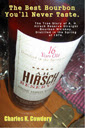
Second, extremely rare and desirable bottles such as A. H. Hirsch Reserve (not to be confused with 'Hirsch' without the 'A. H.') need to see the light of day. With A. H. Hirsch and other very rare products that are no longer available, it's just a shame if there are people who want them, and people happy to part with them, but they can't be brought together. It's un-American.

Most people who bought A. H. Hirsch and the like, including those who bought them by the case, did so because they liked the whiskey and knew the supply was finite. It seems likely that some, perhaps many of those people would like to, as they say, adjust their holdings.

'Open to buy' is an expression in retailing. It's the amount you, the buyer, have available to spend on new merchandise and it's linked directly to the investment you already have in merchandise on the floor. The only way to replenish your 'open to buy' account is to sell some of the merchandise you already own.

Many whiskey collectors are married men whose wives exert strict control over their 'open to buy' account.

It has been many years since any iteration of A. H. Hirsch has been readily available. What's a bottle of A. H. Hirsch 16-year-old gold foil really worth? The best way to find out is to flush out as much of the bunkered stock as possible. If you have any to sell, now is the time to make your move. Don't let your overbought position in Hirsch keep you out of the marketplace for new treats.

The legality questions always loom, of course. It's hard to see how eager sellers connecting with eager buyers, all of whom are above the legal drinking age, does anyone any harm, but that doesn't change the fact that it is illegal to sell alcohol without a license.

Third, what the Bourbon Exchange can do without any legal worries is be an information exchange. It's a place where people can find out more about the bottles they have and the bottles they want. The possibility of transactions doesn't even have to be mentioned. Collectors like to show and talk about their collections. If anything else happens, it happens somewhere else entirely.

When people show what they recently found at retail, you can see what's still 'out there,' in at least some quantity. That also tells you what's not. Part of the hobby is dusty hunting. Dusty hunting and, therefore, its facilitation are 100 percent legal.

Bourbon Exchange is a good place to learn because most of the participants are sufficiently knowledgeable that, Wikipedia-like, correct information is quickly validated and incorrect information is refuted. Unlike the average drinker, bourbon collectors value reliable information, so interference by egregious dopes is kept to a minimum.

Finally, Bourbon Exchange is an opportunity to form a real community around this very specialized interest, which is what social media does best. Being members-only (and the operators are particular about admitting only real identities), everybody can see who else is looking in. People can figure out who to trust. Networks can form. It's a good thing.

The Bourbon Exchange isn't even two months old, so who knows what it will look like in a year, but it should be fascinating to watch.

Tuesday, June 4, 2013

"I Must Govern the Clock, Not be Governed by It"


The legendary Israeli leader Golda Meir said that.

She was not talking about whiskey aging.

But because what she said resonates, it may help explain why someone is always selling one scheme or another to 'govern the clock' with regard to the aging of whiskey, and why people are always eager to believe them.

Cleveland Whiskey's Tom Lix is only the latest, but he's generating a lot of publicity right now. (To which I hate to contribute, so you'll have to Google him for yourself.) Many articles call him a distiller, which he is not. He is a non-distiller producer (NDP), but not a mere re-bottler.

What he does is take bulk whiskey -- six-month old bourbon -- and subject it to a Frankensteinian process he has developed that he estimates ages the spirit the equivalent of 24 hours every second.

(If 'Frankensteinian' seem too strong, consider this. He chops up the barrel and mixes it with the spirit, then subjects the whole mess to agitation, pressure, and lightning. Okay, not lightning.)

Some craft distilleries make similar claims for small barrels, five- to fifteen-gallons as compared to the standard 53.

That's not to say that small barrel aging doesn't have its place. In the hands of a skilled distiller, brief aging in a small barrel can create an original and appealing whiskey. That's a beautiful thing, but neither small barrels nor pressure cookers in Cleveland can produce the taste of a fully aged bourbon in weeks instead of years. That claim is bullshit, pure and simple; always has been, always will be.

If wood extraction was all there is to aging it might be true. There are many ways to speed up the extraction of substances from the oak. One of them, warehouse temperature cycling in winter, is practiced by several major producers. Wood extraction is part of aging but it isn't the whole story. Aging is also about oxygenation, color development, and the removal of unpleasant flavors, all of which takes time.

Still, you have to admire the sheer moxie of someone who thinks he has developed something in his garage that has eluded professional whiskey makers for centuries.

In several of the articles about Lix, the writers have had people taste test Cleveland Whiskey against something like Diageo's Bulleit Bourbon or Beam's Knob Creek. That's the wrong comparison. Lix starts his process with bourbon made by a major bourbon distillery and aged for six months in a new, 53-gallon, charred oak barrel. What none of his collaborators (yes NPR and Forbes, I'm talking about you) have done is taste that good, young, properly-made bulk bourbon against the godawful mess Lix proceeds to make of it. If they did, they might recognize him for the strangler-of-babies-in-their-cradles that he actually is.

But that's not the story they want to write, nor is it a story the proud Cleveland bars that sell the stuff like crazy want to promote. So nobody tells the emperor he's buck naked, except for the occasional honest-to-god bourbon drinker who makes a brief appearance (Matt Wunderle is my hero), only to be hustled into the wings for fucking with the approved narrative.

If I sound grumpy about this, I am. I often say that sometimes I have to drink bad whiskey, but I do it so you don't have to. Well, occasionally I also have to waste my time with stories like this, so you don't have to.

Monday, June 3, 2013

How a Whiskey Shortage Works

After the recent announcement from Buffalo Trace about a general tightening of bourbon supplies -- a 'shortage,' if you will -- many people chose to comment (here and elsewhere) by pointing out that the stores they shop are still well-supplied with the brands in question.

While this at first blush simply seems funny -- how blinkered is your world view that you don't think something is happening unless it's happening to you? -- it suggests that many people don't understand how a whiskey shortage works.

First, it's important to remember the three-tier system. By law, producers sell to distributors and distributors sell to retailers. In many states, merchandise can't flow in the other direction. Even chain retailers can't move stock from store to store to equalize availability. This can lead to one store in a market being out of a certain product, while others in the same market have plenty.

To a whiskey producer such as Buffalo Trace, there is a shortage whenever they receive orders they can't fill. Sometimes this is a very short term problem. For example, there are no more finished goods in the finished goods warehouse ('finished' means bottled, cased, and ready to ship) and there is a gap in time before that particular product is scheduled for another bottling run, but there is sufficient whiskey available, so that a normal bottling can be done at the next opportunity. That's not really a shortage, although it can result in a few very limited out-of-stock situations at retail.

Another situation might be that the producer's finished goods warehouse is bare and there's nothing suitable that's available to bottle -- so there's a shortage as far as the producer is concerned -- but the distributors have sufficient stock that the shortage never reaches retail. A point is reached where everything is on the shelf somewhere -- the producer and distributor stocks are depleted -- but they are able to be replenished before bare shelves appear at retail.

For the consumer, a real shortage occurs when the finished goods warehouse is bare and there is no suitable whiskey available to bottle until the next batch reaches maturity. For several months, distributors and retailers are unable to replenish their stocks of that particular item, leading to multiple retail out-of-stock situations market-wide. That's the kind of shortage consumers notice, because they may have to visit several stores to find the item in question.

When this happens to a particular product with regularity, because demand has out-stripped supply for several cycles, more consumers are likely to perceive a shortage. Instead of having to visit several stores to find what they want, they can't find it no matter how many stores they visit.

An even more severe situation can occur when there is a gap in the pipeline for some reason. A good example of this is George Dickel. Because the distillery was closed for several years during the 1990s, the pipeline for George Dickel No. 8 simply ran out and there was none to be had anywhere for more than a year. A shortage that severe is very rare.

What's happening now is that general demand has been outstripping supply year after year, even though producers have been increasing supply at the production end of the pipeline. When this happens, producers make such adjustments as they can to ensure that their most profitable products remain available. (Throughout the Dickel 8 shortage, Dickel 12 and Dickel Single Barrel remained generally available.) In this situation, the pipeline may dry up for a particular product, meaning some but never all retailers will experience out-of-stocks, but they're temporary because there's product in the pipeline that simply isn't mature yet.

So if you buy a bottle of brand XYZ approximately every three months, there may be an active shortage but you'll never notice it, because your buying cycle missed the two-month window when out-of-stocks were occurring.

Just because you personally haven't perceived a shortage, that doesn't mean it's not real.

Some producers in the past have hyped shortages. Beam did this a few years ago with Knob Creek. The shortage was real but retail out-of-stocks weren't widespread enough for long enough for most consumers to perceive the shortage personally. Many, therefore, called it a hoax, and that has led them to assume that all announced shortages are also hoaxes, leading to the "we've got plenty here in Little Rock" phenomenon.

Another situation is the deliberate shortage, e.g., Van Winkle. For Van Winkle, Buffalo Trace and the Van Winkle family deliberately keep supply behind demand. At the moment it may be further behind demand than they'd like, but Van Winkle will never be in surplus if the producer can help it. Van Winkle also has legitimate supply issues because the products are so highly aged, meaning they can't make much of a change in supply if they want to, but that doesn't alter the fact that they don't want to.

Consumers, of course, can contribute to a shortage. While some people poo-poo the shortage, others go out and stock up. Some do both.

What bourbon and rye drinkers are likely to experience going forward is occasional, temporary shortages of certain products. If stocking up is advisable at all, you probably won't need more than one or two extra bottles to ride through a brief out-of-stock. Panic buying is certainly not necessary. The best advice is probably to use an out-of-stock when one does occur as an opportunity to try something new.